

Just days after American media was awash with reports that Donald Trump was preparing a major attack on Iranian civilian infrastructure, Trump abruptly changed course. Instead of announcing another wave of strikes, he declared that he had cancelled the planned attack and wanted a deal with Tehran.
The reversal immediately raises an obvious question. Are we witnessing another “Islamabad moment” from Trump?
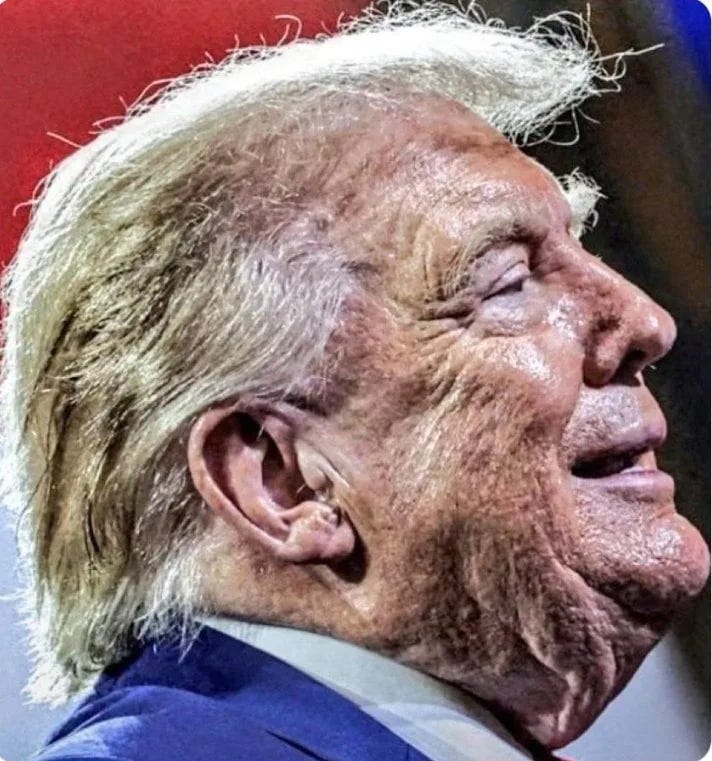
The closing days of the nearly forty day U.S. war against Iran from February to April followed a similar trajectory. Trump steadily escalated his rhetoric, culminating in his extraordinary threat to destroy Iranian civilization. Yet instead of following through, he accepted a ceasefire on terms mediated by Pakistan and entered negotiations that ultimately produced the Islamabad Memorandum of Understanding.
At the time, the agreement was widely viewed as favoring Iran. It envisioned not only a ceasefire, but a framework for ending the war on a regional basis while providing Iran with immediate and tangible economic relief. Those included ending the war in Lebanon, releasing frozen Iranian assets, allowing Iran to establish “arrangements” governing transit through the Strait of Hormuz, and permitting Iranian oil exports under a U.S. waiver.
Yet, none of those provisions were meaningfully implemented.
Instead, Washington sought to minimize the practical concessions it had made. Rather than accepting Iran’s new leverage over Hormuz, the United States attempted to create an alternative U.S.-backed maritime corridor hugging the Omani coast that commercial shipping could use without complying with Iranian arrangements. Iran responded by insisting that vessels use its designated route and by targeting ships that attempted to transit the southern corridor. A familiar cycle quickly emerged. The United States bombed southern Iran. Iran retaliated with missile and drone strikes against U.S. facilities and regional partners, initially concentrating on Kuwait and Bahrain before expanding the campaign to Jordan, Qatar, Oman, and elsewhere. By mid-July, the memorandum had effectively unraveled and the war had entered a new phase.
That new phase has been fundamentally different from the first.
The original American war sought far more ambitious objectives. Trump openly spoke about changing Iran’s “map,” called on Iranian soldiers to lay down their arms, declared that he would choose Iran’s future leadership, and regularly talked about seizing Iran’s oil. The military campaign reflected those ambitions. Police stations, security checkpoints, government institutions, and leadership targets were struck alongside military facilities. Israeli and American bombing also focused heavily on western Iran in what Israeli and U.S. media reported was intended, at least in part, to create space for Kurdish armed groups based in Iraq to invade western Iran.
None of those objectives were achieved. Instead, they backfired spectacularly. The war that began with ambitions of reshaping Iran became a struggle to reopen the Strait of Hormuz.
That shift is extraordinary. Today, Washington is trying to solve a problem that did not exist before the war: the disruption of the Strait of Hormuz (and the Bab al-Mandeb as of late). It is also trying to secure a nuclear agreement that, according to multiple accounts, including Omani officials and Britain’s National Security Adviser, was already within reach before the war began. Having overplayed its hand in pursuit of total Iranian capitulation and/or regime change, Washington now finds itself seeking many of the same diplomatic outcomes from a significantly weaker strategic position.
Indeed, the military balance has drastically changed. CENTCOM says the United States conducted more than 13,000 airstrikes during the February to April phase of the war, not including Israeli operations. Many more followed after the ceasefire collapsed. Yet Iran’s core asymmetric capabilities, its ballistic and cruise missiles, drones, underground facilities, naval assets, and ability to project force across the region remain intact. Judging from recent weeks, Iran continues to strike with precision against U.S. positions as far away as Jordan while commercial shipping through the southern route in Hormuz remains deeply vulnerable despite repeated American bombings.
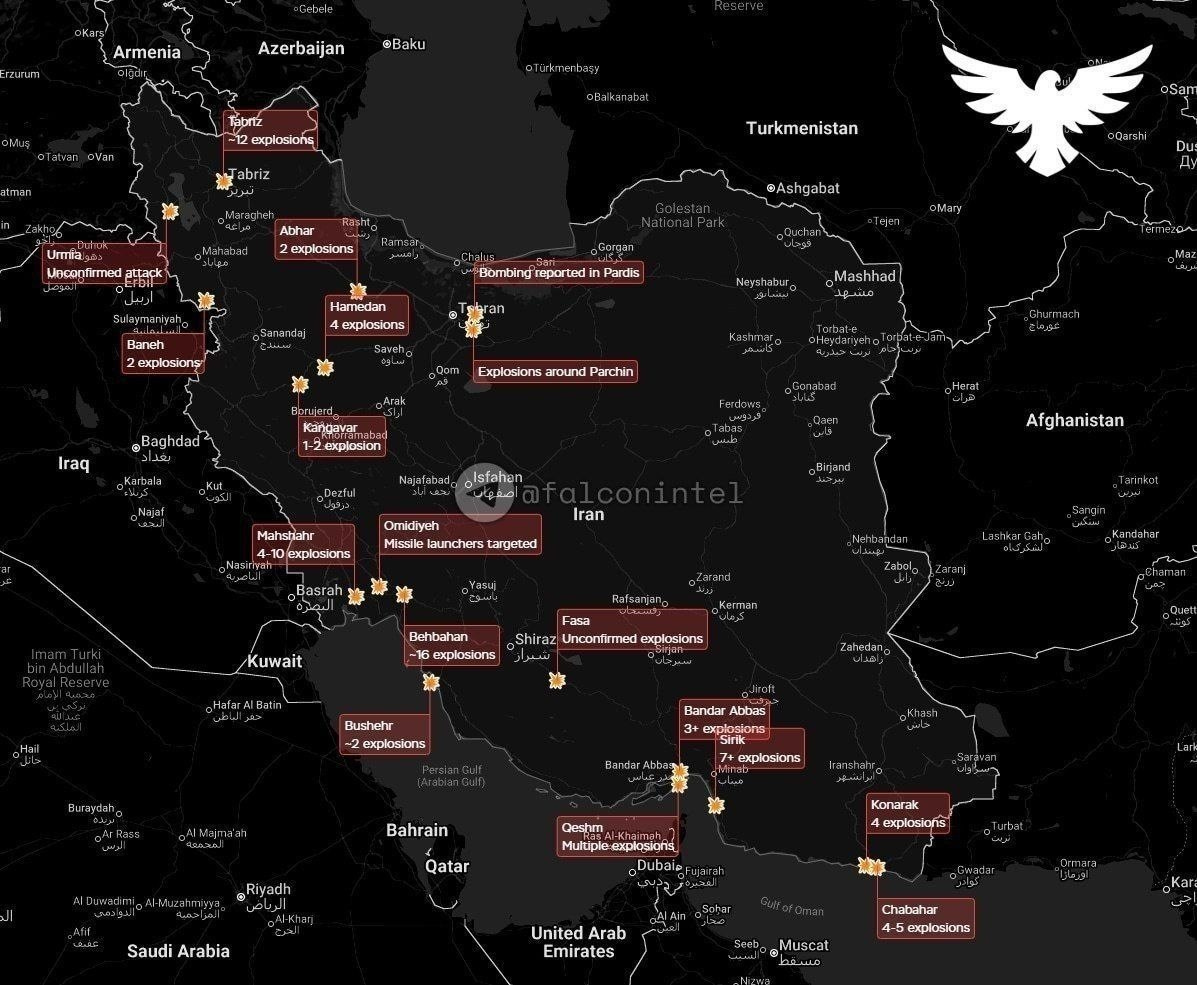
This illustrates a broader lesson about the limits of airpower. Air campaigns can destroy infrastructure and eliminate fixed targets, but they are far less effective at dismantling dispersed and mobile forces, underground bases, or compelling political outcomes. If anything, by all accounts, the United States is now deeply mired in the practical constraints of a prolonged air campaign. Interceptor inventories have been heavily depleted, and the rapid consumption of precision-guided munitions has become a growing concern inside the administration. Recent reporting indicates that Joint Chiefs Chairman Gen. Dan Caine has warned about dwindling interceptor stocks, mounting logistical pressures, and the strain an extended air campaign is placing on broader U.S. military readiness.
That is why the initiative increasingly appears to be shifting in favor of Iran.
After Washington paused its attacks last week, Iran briefly did the same. It then resumed the fighting on its own terms, launching a preemptive strike against U.S. forces in Jordan before continuing attacks on targets in Bahrain and Kuwait while commercial shipping through the southern Hormuz corridor remained under pressure. Trump has responded not with the massive escalation many expected, but with another diplomatic opening.
Iran’s strategy is increasingly clear. It is not trying to defeat the United States militarily. It is trying to make prolonged confrontation economically and politically unsustainable. Every additional week of disruption raises costs for global energy markets while continuing to drain American interceptor inventories and offensive munitions. It increases political pressure on Trump as fuel prices rise and an already deeply unpopular war moves closer to the midterm elections. At the same time, repeated strikes against U.S. bases seek to make America’s regional military posture more costly and less sustainable while convincing Gulf states that their security cannot be separated from Iran’s own security.
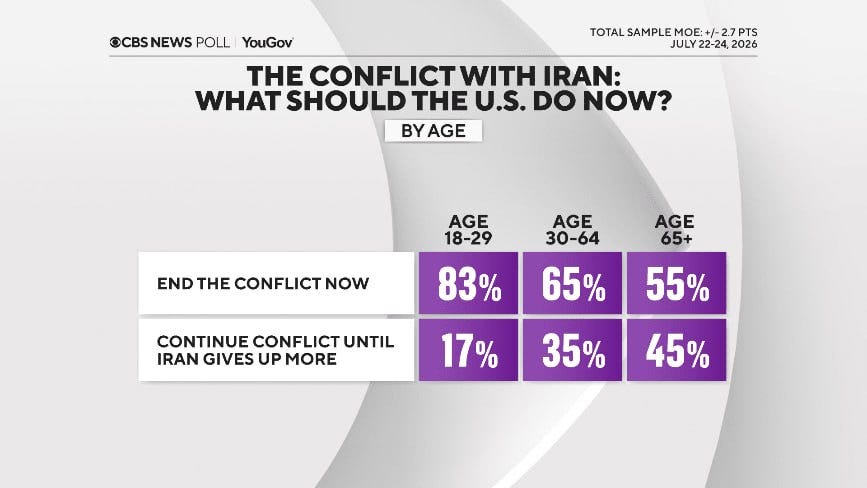
This is ultimately a struggle over the future regional order. Tehran is attempting to demonstrate that efforts to isolate or militarily coerce Iran will not produce regional stability, but regional insecurity. More fundamentally, it is trying to convince the Persian Gulf Arab monarchies that the decades-old American security umbrella has become conditional and costly. If Washington cannot shield its closest regional partners from sustained retaliation while pursuing confrontation with Iran, then the premise underlying the region’s security architecture begins to erode. Iran’s message is that Persian Gulf security cannot be achieved against Iran, only with Iran. Rather than accepting a regional order built on American military primacy and Iran’s isolation, Tehran is seeking one that recognizes Iran as an indispensable security actor whose interests cannot be ignored. That message appears to be resonating. The Persian Gulf Arab monarchies have become noticeably more cautious about further escalation, and reports suggest Saudi Arabia has repeatedly urged restraint during this latest crisis.
Trump now faces the same choice he confronted in April. He can accept that the era of maximalist ambitions is over and negotiate from the world as it is, not as he hoped it would become. Or he can double down through infrastructure warfare or even contemplate a ground invasion that would almost certainly deepen America’s strategic predicament while delaying, and raising the price of, the diplomacy that remains inevitable.
The greatest lesson of this war may not be about Iran at all. It may be about the changing character of modern warfare. The United States has demonstrated an extraordinary capacity for destruction. What it has not demonstrated is an equal ability to translate that destruction into durable strategic outcomes. That is a lesson Washington will likely confront not only in Iran, but in every future conflict where geography, precision weapons, and political resilience increasingly constrain the utility of overwhelming air power.
It’s not just changing character of modern warfare. It’s also changing character of old hegemon. Its power is dwindling.