

The latest round of protests in Iran began on Sunday (December 28), sparked by a group of mobile phone and technology merchants in Tehran going on strike. They have been among the sectors hardest hit by the rial’s sharp depreciation in the past month.
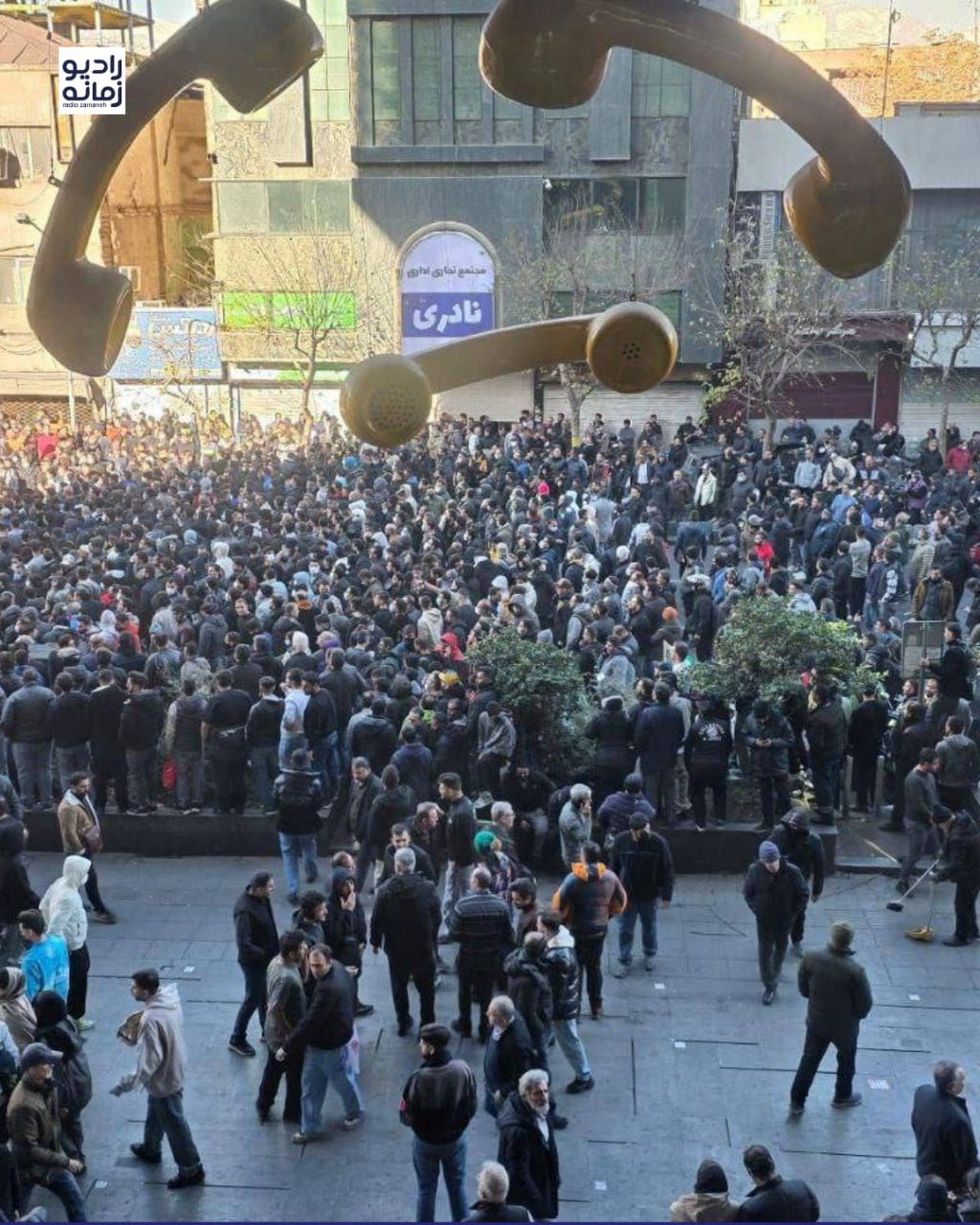
From there, the protests spilled into surrounding streets of the capital and, over subsequent days, into other cities across the country. As they spread, economic grievances increasingly mixed with overt anti-government slogans, as seen in past protest movements.
How should we evaluate the political significance of these protests, and their potential to produce transformational change?
Decades of protest cycles under the Islamic Republic suggest three core variables matter most:
1. Geographic spread: how widely protests extend across the country
2. Social composition: who is participating, i.e. merchants, workers, the middle class, students, labor unions, ethnic minorities.
3. Elite and security defections: whether cracks appear within governing or security institutions
Looking at past movements through this lens helps clarify both the possibilities and limits of the current moment.
The largest protest movement Iran has seen under the Islamic Republic remains the 2009 Green Movement, following the contested reelection of Mahmoud Ahmadinejad. Backed by reformist presidential candidates Mir-Hossein Mousavi and Mehdi Karroubi, the movement mobilized enormous numbers. At one point, upwards of three million people filled the streets of Tehran.
The Green Movement protests endured for months and had recognizable leadership, but were concentrated largely in major urban centers and among the middle class.
Ultimately, the movement was repressed and fizzled out, with its leaders placed under house arrest, but it stands out for the sheer scale of mobilization.
The next major rupture came with the winter 2017–2018 protests, driven by economic grievances. These demonstrations drew far smaller crowds than 2009 but spread across a wider geographic area, particularly in smaller cities and towns. After their start in Mashhad and among bazaaris, they became explicitly anti-system and more violent, marked by clashes with security forces and attacks on banks and government buildings.
That pattern intensified in November 2019, when a sudden hike in gasoline prices triggered a countrywide uprising. The protests were especially notable for the scale of the crackdown: global internet access was shut down for roughly ten days, and Amnesty International later documented more than 300 deaths. Like 2017–2018, these protests were concentrated outside major urban centers and were led primarily by working-class communities rather than the urban middle class.
The 2022–2023 “Women, Life, Freedom” movement, sparked by the death of Mahsa Amini in morality-police custody, marked another shift. Protests spread rapidly nationwide and drew in students, teenagers, and middle-class youth in large numbers, particularly on university campuses. While geographically expansive and socially diverse, the movement still mobilized far fewer people at any given moment than 2009. According to Israel’s military intelligence directorate (Aman), at its peak roughly 45,000 people were protesting nationwide at any one time, with more than 500 killed and around 19,000 detained.
Where the Current Protests Fit
The current protests differ in origin but rhyme with earlier economic uprisings. They began with merchants, specifically importers squeezed by currency depreciation, echoing the initial bazaar-linked dynamics of 2017–2018.
From there, protests have spread modestly in parts of Tehran and into other cities, including pockets of unrest—some marked by violence and severe government crackdown—in smaller cities and rural areas.
Measured against the three criteria outlined above:
Geographic scope: The protests have spread beyond Tehran, but remain smaller so far than those of 2017–2018, 2019, or 2022–2023.
Social composition: Merchant participation from the outset is significant, and broader public sympathy is evident, though sustained engagement from organized labor, large numbers of middle class, and ethnic minorities appears limited thus far.
Elite defections: As with every protest cycle since 2009, there have been no meaningful defections from the government or security forces, thus far at least. The closest Iran ever came to this dynamic was during the Green Movement, when many reformist insiders openly sided with protesters.
What Comes Next?
Iran today is marked by deep and widespread discontent, driven above all by a worsening cost-of-living crisis. That creates real potential for escalation. At the same time, history counsels caution. Many protest waves have surged only to recede under repression, exhaustion, or fragmentation.
So far, this movement most closely resembles the 2017–2018 and November 2019 economic protests: decentralized, sparked by economic shocks, geographically dispersed beyond major cities, and met with force. Whether it grows into something larger—or fizzles out—will hinge on whether it broadens across social classes, develops nationwide momentum, and, crucially, produces cracks within the state itself.
Those are the most important signals to watch out for.
Thanks for this concise and informative summary. Also a big difference from past protests is that Iranians are currently living under the threat of a major war from Israel and the US. I’m sure Netanyahu and his cronies, and US neo-cons are looking for ways to exploit these protests. Of course it would seem that the economic situation in Iran is the result of economic warfare from the US and EU.
Just looking for where to put a few well-placed bombs to hope the Persians free themselves, like shithead Obama could have done in 2009.